
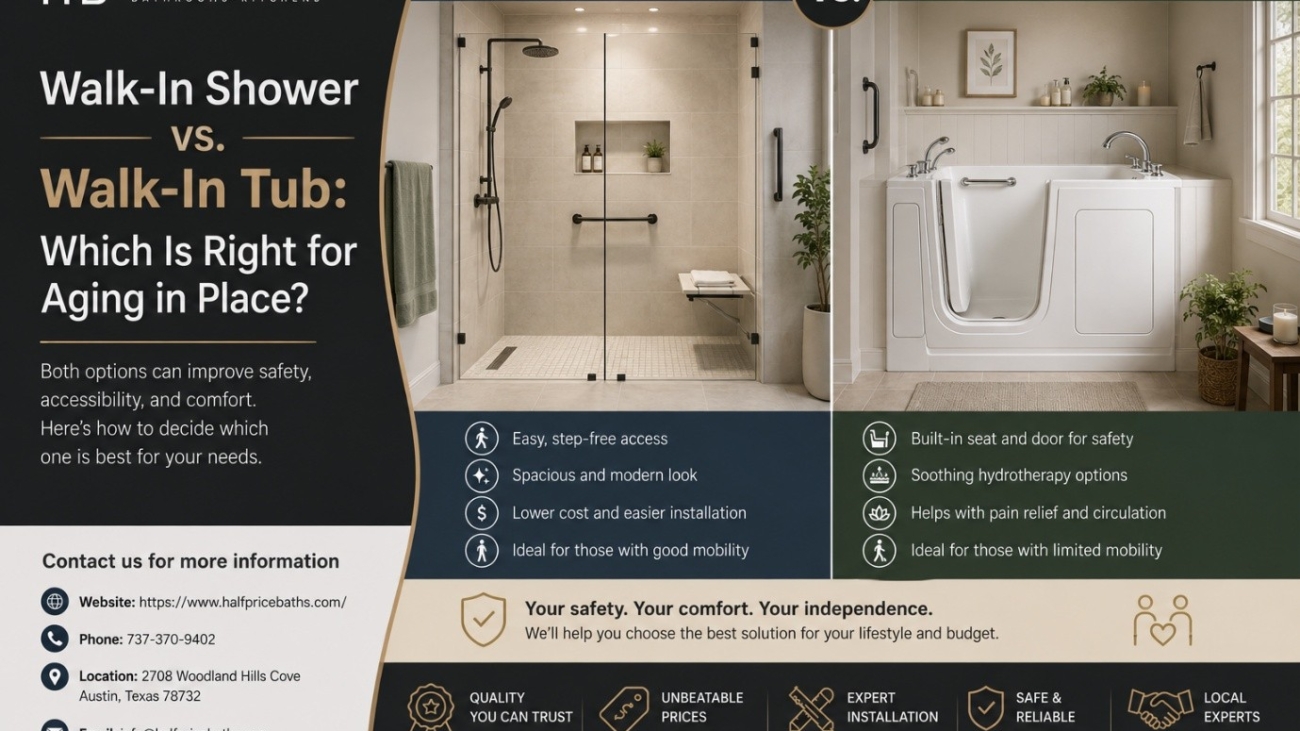
Summary: When comparing a walk-in shower vs. walk-in tub for aging in place, the right choice depends on mobility needs, bathroom space, budget, and future accessibility goals. This guide explains the safety, cost, maintenance, and usability differences between both options. Homeowners can make an informed decision by understanding which solution offers the best comfort, independence, and long-term value.
Choosing the right bathing solution is an important decision for homeowners who want to make their bathroom safer, more comfortable, and easier to use as they age. When comparing walk in shower vs tub, there is no single answer that works for everyone. The better option depends on your mobility level, whether you need caregiver assistance, your bathroom space, your budget, and how your needs may change in the future.
Both walk-in showers and walk-in tubs are designed to reduce safety risks and support independent living. A walk-in shower can provide easy entry, flexibility, and better accessibility, while a walk-in tub can offer a seated bathing experience with therapeutic benefits.
Understanding the differences between these two options can help you choose a bathing solution that supports your lifestyle today while preparing your bathroom for the years ahead.
What’s the Difference Between a Walk-In Shower and a Walk-In Tub?
A walk-in shower and a walk-in tub both improve bathroom accessibility, but they are designed for different bathing experiences. The main difference is how users enter, bathe, and exit the space.
How a walk-in shower works
A walk-in shower is a shower area designed with a low-threshold or barrier-free entry that allows users to step directly into the shower without climbing over a traditional bathtub wall. Many designs include a curbless entry, built-in seating, handheld showerheads, and safety features.
A walk-in shower can be used while standing or sitting, making it suitable for homeowners with different mobility needs. A roll in shower design can also allow wheelchair users to enter easily without needing assistance.
How a walk-in tub works
A walk-in tub is a bathtub with a watertight door that allows users to enter through a small opening instead of stepping over a high tub wall. After entering, the user sits down before filling the tub with water.
A walk-in tub is often selected by homeowners who prefer deep soaking, heated seating, or hydrotherapy features. However, users must wait for the tub to fill before bathing and drain completely before exiting.
Comparison Table: Walk-In Shower vs Walk-In Tub at a Glance
When comparing a walk in shower vs tub, consider safety, convenience, space, maintenance, and long-term value before making a decision.
| Feature | Walk-In Shower |
Walk-In Tub |
| Safety/fall risk | Easier entry with fewer movement challenges; can include seating and grab bars | Safer than traditional tubs but requires entering and exiting while wet |
| Wait time | Immediate access without filling or draining | Requires waiting for filling and draining |
| Space needed | Flexible designs fit many bathroom layouts | Usually requires more space for installation |
| Caregiver access | Open design allows easier assistance | Enclosed design can limit caregiver movement |
| Maintenance | Easier cleaning and fewer mechanical components | Requires maintenance of doors and seals |
| Resale value | Appeals to a wider range of buyers | Best suited for buyers seeking accessibility features |
| Typical installed cost range | Depends on size, materials, and customization | Usually higher due to specialized equipment |
Safety Comparison for Aging in Place
Safety is often the biggest concern when choosing a bathroom solution for aging in place. A properly designed accessible bathroom can reduce fall risks while improving comfort and independence.
Entry/exit and fall risk
The biggest safety advantage of a walk-in shower is the easier entry and exit. Traditional bathtubs require users to lift their legs over a high wall, which can become difficult with balance issues or limited mobility.
A curbless shower removes this barrier and creates a smoother transition between the bathroom floor and shower area. Understanding the difference between curb vs curbless shower designs can help homeowners choose a safer layout.
Additional safety features such as seating, non-slip flooring, and walk-in shower grab bars and ADA requirements can make daily bathing easier and safer.
A properly designed roll in shower can also support individuals who use wheelchairs or walkers by providing a completely accessible entrance.
The tub “wait time” tradeoff
When comparing walk in shower vs walk in tub for elderly, one important factor is the waiting period involved with walk-in tubs.
A walk-in tub requires users to enter the tub before filling it with water. After bathing, the user must remain seated until the water drains before opening the door and exiting.
This waiting period can be uncomfortable for some people, especially if they become cold while waiting. It may also create challenges for individuals who have difficulty sitting for longer periods.
A walk-in shower eliminates this issue because users can enter, bathe, and exit without waiting for water levels to change.
Emergency access if something goes wrong mid-bathe
When considering walk in shower vs walk in tub for elderly, emergency access should be part of the decision.
A walk-in shower usually provides a more open bathing area, making it easier for caregivers or family members to assist if an emergency occurs. The design also allows more room for movement.
Walk-in tubs may provide a secure seated bathing experience, but their enclosed structure can make emergency assistance more difficult.
For homeowners planning long-term accessibility, choosing the right design can improve both safety and peace of mind.
Accessibility for Wheelchairs, Walkers & Caregivers
Accessibility is not only about entering the shower safely. A well-designed bathroom should also provide enough space for mobility devices and caregiver assistance.
Roll-in / curbless shower access for wheelchair and walker users
A wheelchair accessible shower provides a safer bathing solution for individuals who use wheelchairs or walkers. These showers typically feature a wider entrance, level flooring, seating options, and easy-to-reach controls.
A roll in shower allows a wheelchair to move directly into the shower space without navigating steps or raised edges. This design can help users maintain independence while reducing the need for physical assistance.
Many homeowners planning an accessible bathroom remodel Austin project choose accessible shower designs because they provide flexibility for changing mobility needs.
How much space a caregiver needs to physically assist
Caregiver accessibility is an important factor that many homeowners overlook.
A walk-in shower generally provides more open space for caregivers to assist with bathing, transfers, and personal care. Features such as wider entrances, seating, and thoughtful layouts can make assistance safer and easier.
Homeowners exploring handicap walk-in shower ideas should consider not only personal mobility but also the space needed for another person to provide support when required.
A bathroom designed for aging in place should offer independence while also allowing flexibility for future care needs.
Cost Comparison: What You’ll Actually Pay
The cost of a bathroom accessibility upgrade depends on the size of the project, selected materials, plumbing requirements, and the number of safety features added. Both walk-in showers and walk-in tubs can improve bathroom usability, but their installation processes and pricing factors are different.
Homeowners should consider not only the initial investment but also long-term maintenance, ease of use, and how well the solution supports future mobility needs.
Typical installed cost range for a walk-in shower
A walk-in shower can be a cost-effective choice when converting an existing bathtub or updating an outdated bathroom layout. The final price depends on whether the project involves a simple replacement or a complete accessibility-focused renovation.
The walk-in shower cost in Austin can vary depending on factors such as shower size, materials, plumbing adjustments, waterproofing requirements, and accessibility upgrades.
Common factors that influence walk-in shower pricing include:
- Size of the shower area
- Choice of tile, fixtures, and finishes
- Installation of seating and grab bars
- Drainage improvements
- Shower door or enclosure options
- Plumbing changes
- Custom accessibility features
A basic tub-to-shower conversion may require fewer modifications, while a fully customized accessible shower with premium materials and additional safety features may involve a higher investment.
Professional walk-in shower installation can help ensure proper waterproofing, drainage, and long-term performance.
Typical installed cost range for a walk-in tub
Walk-in tubs generally have higher installation costs because they include specialized features such as watertight doors, deep soaking areas, and optional therapeutic systems.
The final cost depends on:
- Tub model and size
- Door design and sealing system
- Hydrotherapy or air jets
- Plumbing modifications
- Electrical requirements
- Bathroom preparation work
While walk-in tubs can provide comfort and therapeutic benefits, homeowners should also consider future maintenance needs. Components such as doors, seals, and mechanical features may require additional attention over time.
What drives the price up or down for each
The cost difference between a walk-in shower and a walk-in tub depends on the specific bathroom and the homeowner’s goals.
|
Walk-In Shower Cost Factors |
Walk-In Tub Cost Factors |
|
Existing bathroom layout |
Tub size and model |
|
Custom finishes and materials |
Hydrotherapy features |
|
Plumbing relocation |
Electrical installation |
|
Accessibility upgrades |
Door and sealing system |
| Shower enclosure options |
Installation complexity |
For many homeowners, the most valuable option is the one that provides long-term safety, comfort, and independence. A professional evaluation can help determine which solution fits your home and lifestyle.
Space & Existing Layout Considerations
Bathroom size and existing layout play an important role when choosing between a walk-in shower and a walk-in tub.
A walk-in shower can often be installed in the same location as an existing bathtub, especially when homeowners want to avoid major plumbing changes. Because showers can be customized in different sizes, they are often suitable for both small and large bathrooms.
A walk-in tub usually requires enough space for the tub unit, door operation, and safe movement around the bathing area. Some bathrooms may need additional modifications to accommodate the larger structure.
Before starting a renovation, consider:
- Existing tub or shower footprint
- Location of plumbing lines
- Available floor space
- Bathroom door clearance
- Future mobility requirements
A properly planned layout can improve safety while making the bathroom easier to use. Choosing the right placement for seating, grab bars, and fixtures can also make daily routines more comfortable.
Resale Value: Which Do Buyers Prefer?
When considering resale value, walk-in showers generally have broader appeal among homebuyers. Modern, open shower designs are popular because they combine style, convenience, and accessibility.
A walk-in tub can also add value, especially for buyers who specifically need aging-in-place features or therapeutic bathing options. However, it may appeal to a smaller group compared with a well-designed accessible shower.
A bathroom upgrade that includes accessibility features without sacrificing appearance can provide the best balance. Features such as a wheelchair accessible shower, comfortable seating, and attractive finishes can make the space useful for current homeowners while appealing to future buyers.
Which One Is Right for You? A Simple Decision Framework
Choosing the best bathing option for aging in place depends on your current situation and how your needs may change over time.
Use this checklist to compare your options:
- Assess your current mobility level Consider how easily you can step, stand, balance, and move around the bathroom. If you need wheelchair access, walker support, or easier entry, a walk-in shower may provide better flexibility.
- Consider caregiver involvement If a caregiver, spouse, or family member assists with bathing, choose a design that allows enough room for safe movement. Open shower layouts typically provide easier access for hands-on assistance.
- Review your bathroom space Measure your existing bathroom and determine which option fits your current footprint. A walk-in shower may work better in smaller spaces, while a walk-in tub requires additional room.
- Compare your budget and renovation timeline Consider installation costs, maintenance needs, and how quickly you need the project completed. Some bathroom changes may require more construction than others.
- Think about future mobility needs A bathroom renovation should support your lifestyle for the next 5–10 years. Consider adding features such as seating, grab bars, wider entrances, and easy-to-use fixtures that can adapt as your needs change.
The right choice depends on your priorities. Some homeowners prefer the openness and flexibility of a walk-in shower, while others value the soaking comfort of a walk-in tub.
Make Your Bathroom Safer With Professional Accessibility Planning
Choosing between a walk-in shower and a walk-in tub is an important decision for creating a safer and more comfortable home. A professional consultation from us – Half Price Baths LLC, can help you evaluate your bathroom layout, mobility needs, and long-term goals.
If you are planning an accessible bathroom remodel Austin, schedule a free in-home accessibility consultation serving Austin, Dripping Springs, Bee Cave, and Steiner Ranch. We are available through mail – info@halfpricebaths.com or you can schedule a call at – 737-370-9402!
FAQ
Is a walk-in shower or walk-in tub safer for seniors?
Both options can improve bathroom safety compared with a traditional bathtub. A walk-in shower is often preferred because it provides easier entry, faster access, and better caregiver support. A walk-in tub may be a better option for individuals who prefer seated bathing and therapeutic features.
Can I have both in the same bathroom?
Yes, some larger bathrooms can include both a walk-in shower and a bathtub. However, this requires enough space and proper planning. Many homeowners choose one accessible bathing solution based on their mobility needs and available bathroom area.
How long does installation take for each?
Installation time depends on the complexity of the project. A walk-in shower conversion may take several days to a few weeks depending on customization. Walk-in tub installation time depends on the tub model, plumbing requirements, and bathroom preparation.
Does Medicare or insurance cover either option?
Medicare and many insurance plans generally do not cover standard bathroom remodeling costs. However, coverage may vary depending on specific circumstances, insurance policies, and available assistance programs. Homeowners should check directly with their provider.