
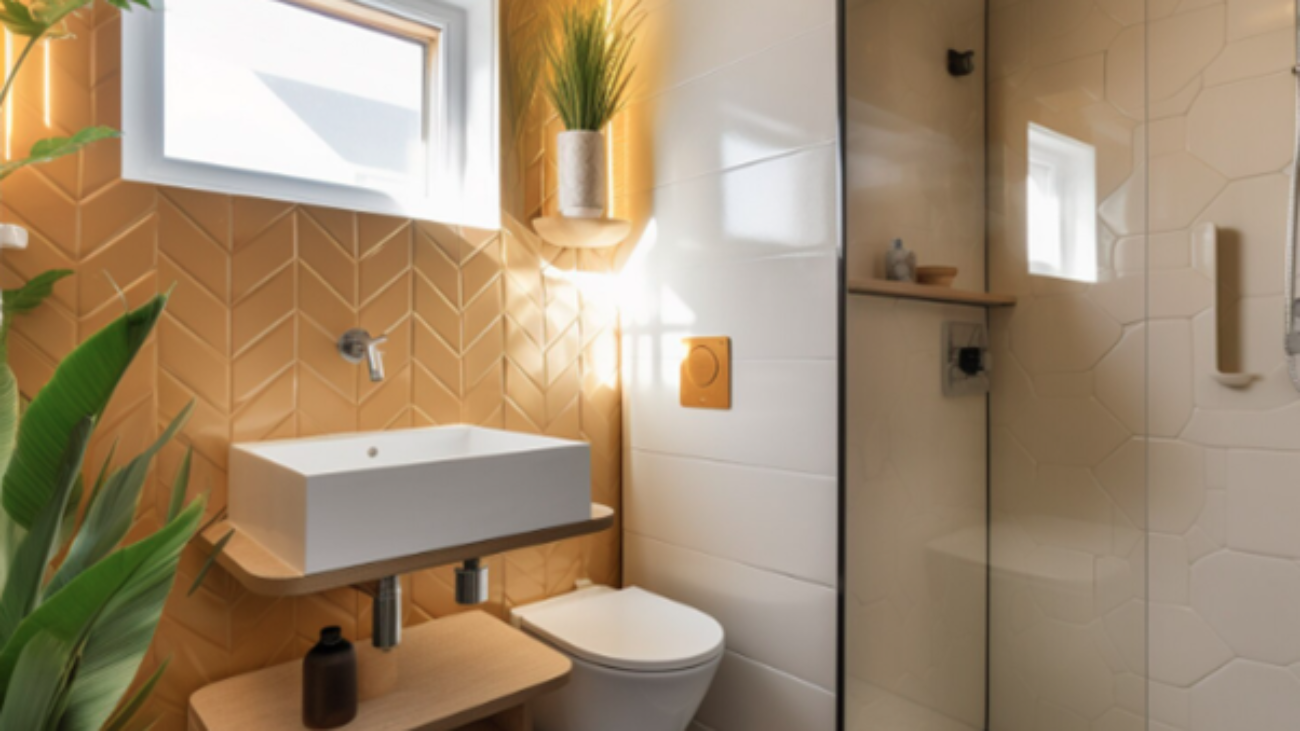
Imagine a bathroom that feels like a boutique hotel but costs less than a designer handbag. Most people think “cheap” means “flimsy,” while “luxury” means “bank-breaking.” We are here to shatter that myth. By choosing smart materials, you can renovate small bathroom on a budget while achieving a high-end, bespoke aesthetic that lasts for decades.
Ceramic or Porcelain: Which Surface Wins?
Choosing your floor is like picking the foundation for a painting. Ceramic tiles are the budget-friendly darling of the design world. They are softer and easier to cut, which keeps labor costs low. However, porcelain is the dense, “tough guy” cousin. It resists water better because it is baked at higher temperatures, making it nearly invincible against spills.
- Ceramic: Costs roughly $1 to $5 per square foot. It offers endless colors but can chip if you drop a heavy perfume bottle.
- Porcelain: Runs about $3 to $10 per square foot. It is “through-body,” meaning if it chips, the color stays the same all the way through.
- Maintenance: Both are easy to wipe. Use a light-colored grout to make the room feel airy, but seal it to prevent stains.
A little-known secret? Large tiles in a tiny room actually make the space feel bigger because there are fewer distracting grout lines. But there is a catch that most contractors won’t tell you until the tile is already bought…
Acrylic vs. Fiberglass: The Bathing Beauty Battle
When renovating bathrooms, the tub or shower base is your biggest functional piece. Fiberglass is the most affordable entry point. It is lightweight and easy to install. However, it is porous, which means it can fade or yellow over time. It feels a bit like a sturdy plastic toy—functional but not exactly “royal.”
- Fiberglass: Expect to pay $300 to $600. It is great for a quick flip or a guest bath that rarely gets used.
- Acrylic: This is the sweet spot for luxury. It costs $600 to $1,200 but stays warm to the touch and resists scratches beautifully.
- Durability: Acrylic is reinforced with fiberglass, so you get the strength of both worlds without the dull finish.
According to a 2024 Houzz Real Estate Trends report, homeowners who prioritize high-efficiency fixtures and durable surfaces like acrylic see a 60% higher return on investment during resale. Choosing the right tub isn’t just about bathing; it’s about smart equity.
MDF vs. Solid Wood: The Vanity Secret
Your vanity is the centerpiece of your ideas for small bathroom renovations. You might think solid wood is the only choice for “quality,” but bathrooms are humid places. Solid wood can warp or crack when the steam from your shower hits it. This is where engineered options actually outshine the natural stuff.
- MDF (Medium Density Fiberboard): This material is smooth and takes paint like a dream. It doesn’t expand or contract, making it perfect for damp spaces.
- Solid Wood: It is gorgeous and strong, but usually costs double. If you want the wood look, go for a moisture-sealed birch or oak.
- Price Point: MDF vanities start around $200, while solid wood custom pieces can easily soar past $1,200.
But wait, even the most expensive wood will rot if you don’t address one tiny, invisible detail during the installation process…
Customizing Your Dream with Professional Precision
You don’t have to navigate these aisles alone. This is where Half Price Baths steps in to transform your vision into reality. We specialize in bringing high-end design to your doorstep at a fraction of the cost. With our “half the price” promise, we focus on material sourcing that looks like a million bucks without the heavy price tag.
Our team offers a fast turnaround because we know you want your home back. We provide deep customisation, ensuring that every tile and vanity fits your specific nook perfectly. Our high satisfaction rate comes from the fact that we don’t just install; we curate. We help you pick the materials that survive your kids, your pets, and your morning rushes.
The Final Flourish: Hardware and Lighting
Never underestimate the power of a gold faucet or a matte black towel rack. These are the “jewelry” of your bathroom. Even a basic white vanity looks expensive when paired with heavy, well-made handles. Use “warm white” LED bulbs to give your skin a healthy glow in the mirror every morning.
Lighting creates the mood. A backlit mirror is a modern trick that adds depth to a small wall. It hides the shadows and makes the room feel like a high-end spa. Pair this with a fresh coat of “eggshell” finish paint to reflect light without looking shiny or plastic-like.
Summary of Smart Choices
| Feature | Budget Option | Premium Option |
Best Value |
|
Flooring |
Ceramic | Porcelain |
Porcelain (Durability) |
|
Bathtub |
Fiberglass | Cast Iron |
Acrylic (Warmth/Price) |
|
Cabinets |
Particle Board | Solid Wood |
MDF (Moisture Resistance) |
|
Counters |
Laminate | Quartz |
Prefab Granite |
Ready to turn that cramped corner into a personal sanctuary? Whether you need a quick refresh or a total overhaul, we can guide you through every choice.
Frequently Asked Questions
1. Is it cheaper to keep the same bathroom layout?
Yes. Moving pipes and drains is the most expensive part of a remodel. Keeping your toilet and sink in their original spots saves thousands.
2. How can I make my small bathroom look bigger?
Use a clear glass shower door instead of a curtain. This allows the eye to see the full length of the room instead of stopping.
3. What is the best flooring for a wet bathroom?
Porcelain tile is the champion. It absorbs less than 0.5% of water, making it nearly waterproof and very hard to stain or crack.
4. Can I paint my old bathroom vanity?
Absolutely. Use a high-quality moisture-resistant primer and a semi-gloss cabinet paint. It is the fastest way to refresh the space for under $50.
5. Why should I hire a professional instead of doing it myself?
Pros catch hidden issues like mold or leaky valves early. They also get trade discounts on materials, often paying for their own labor costs.